After sixteen years of devouring her books and seven years of hoping our paths might cross, I was about to sit across from a woman who’d inspired my dreams of becoming a travel writer.
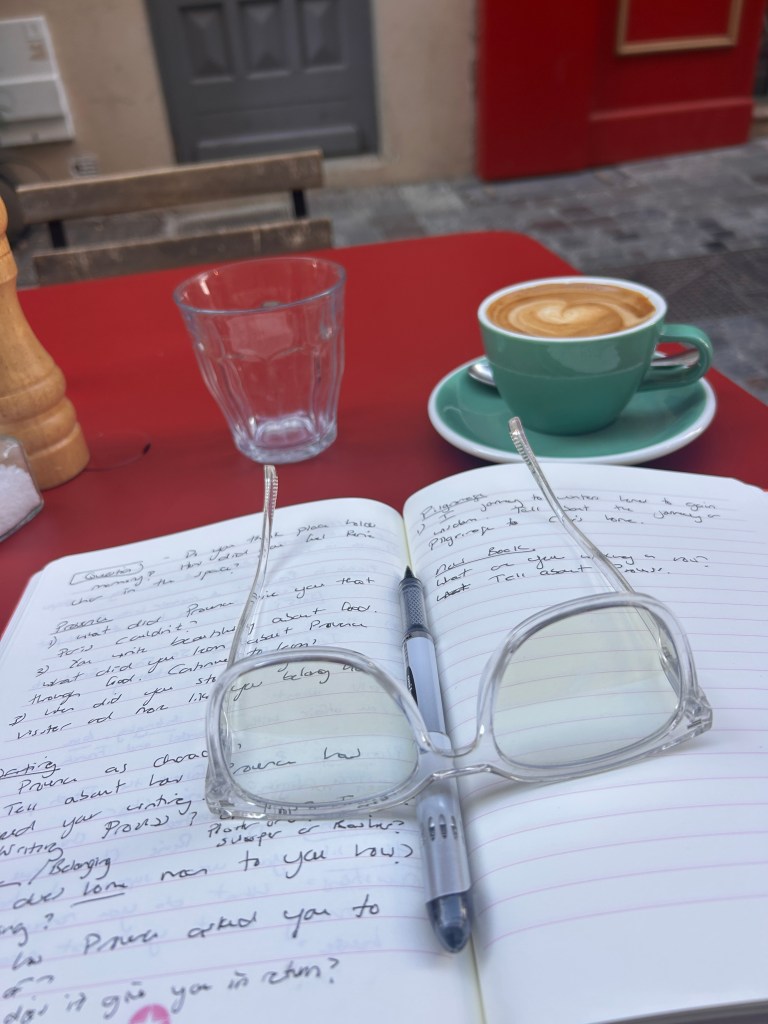
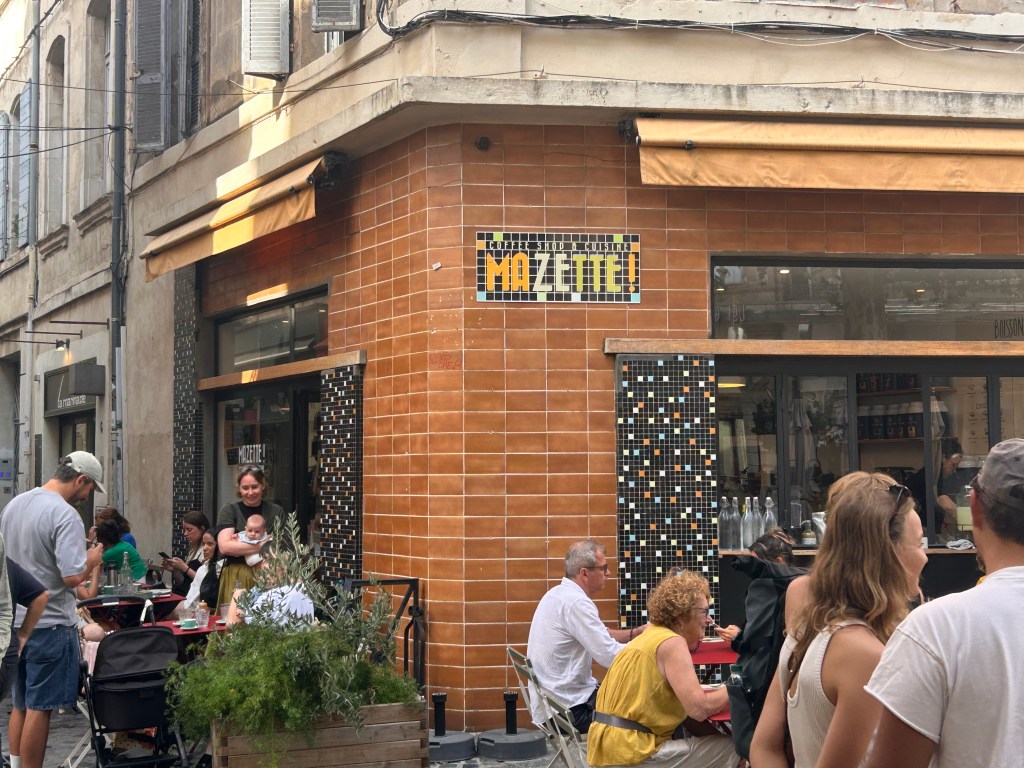
I arrived early at Mazette, a hip coffee shop in Arles, a Provençal town with ancient Roman ruins, and claimed a cherry-red table beneath the September sun. I arranged my notebook, pen, and reading glasses, trying to look like a serious literary journalist rather than a middle-aged woman fangirling over her literary idol. I’d ordered a flat white, imagining something resembling a latte. Instead, I received a tiny turquoise cup containing enough caffeine to restart a stopped heart.
Perfect. Just what my nervous system needed.
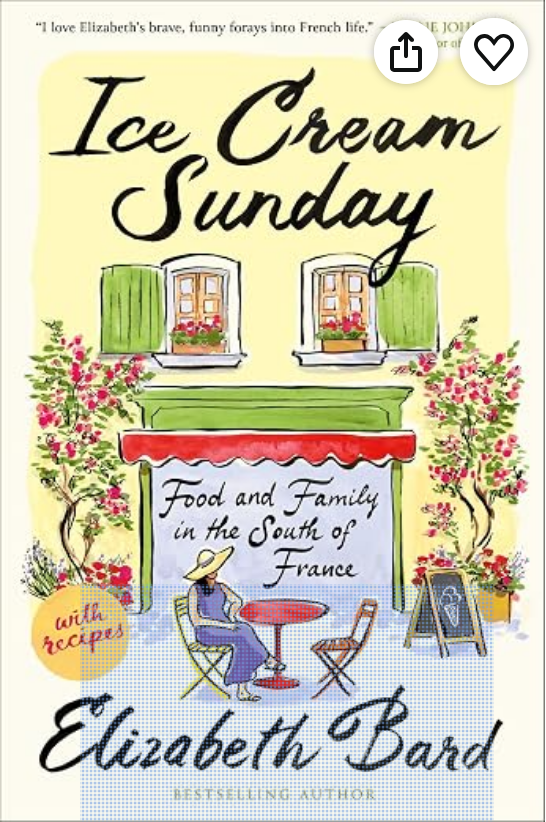
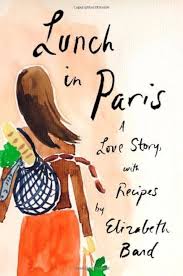
Elizabeth Bard was the author of Lunch in Paris, a memoir I’d devoured in 2010, when my appetite for travel narratives far exceeded my ability to write one. Her story of falling in love with a Frenchman, navigating cultural differences, and finding herself in Paris had everything I adored: romance, food, France, and a woman trying to figure out what on earth she was doing with her life.
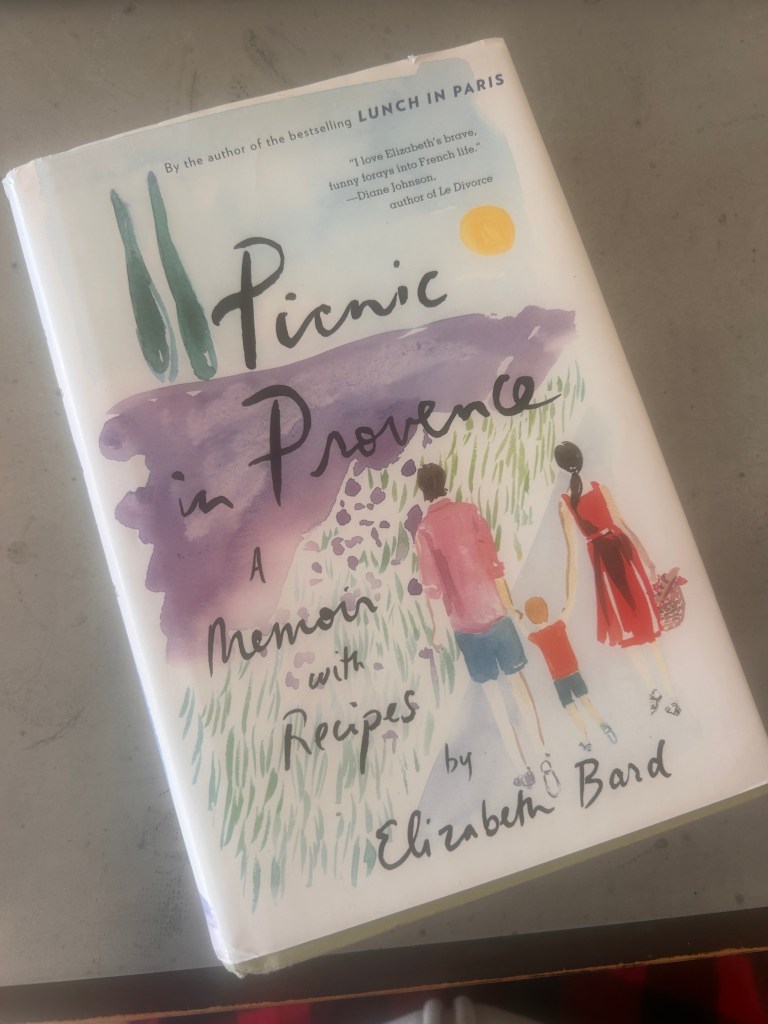
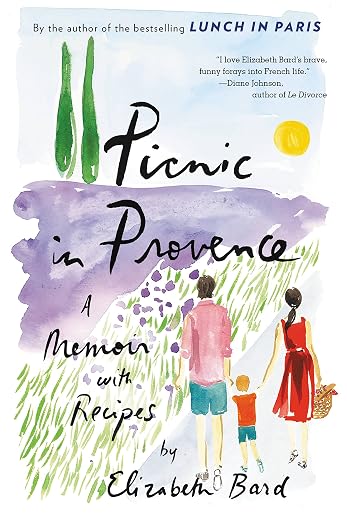
By the time I read Picnic in Provence five years later, my marriage had ended, I’d attended my first travel writing conference, and I’d launched a website devoted to literary travel. And here was Elizabeth beginning her second memoir with a literary pilgrimage to the home of French poet René Char. That adventure had led her and her husband, Gwendal, from Paris to the Luberon, to an ice cream business, a village community, and an entirely unexpected future.
I loved the possibilities her story suggested. I’d spent years visiting the homes, haunts, and graves of writers. Could following in their footsteps actually change the course of my own life? I also loved her candor. Elizabeth could be anxious, opinionated, insecure, occasionally ridiculous. She didn’t emerge from every chapter looking particularly noble, which was reassuring. Neither did I. And I loved what she’d made of it all: turning the places she’d lived and the life she’d stumbled through into stories.
I had so many questions for her. The trouble with most of my literary heroes was that they’d been dead for decades, if not centuries. Their availability for follow-up questions was limited.
Then, in 2019, while staying at a guesthouse in Provence, our host mentioned that she knew Elizabeth Bard, as casually as she might have said she was friends with the local baker.
The Elizabeth Bard?
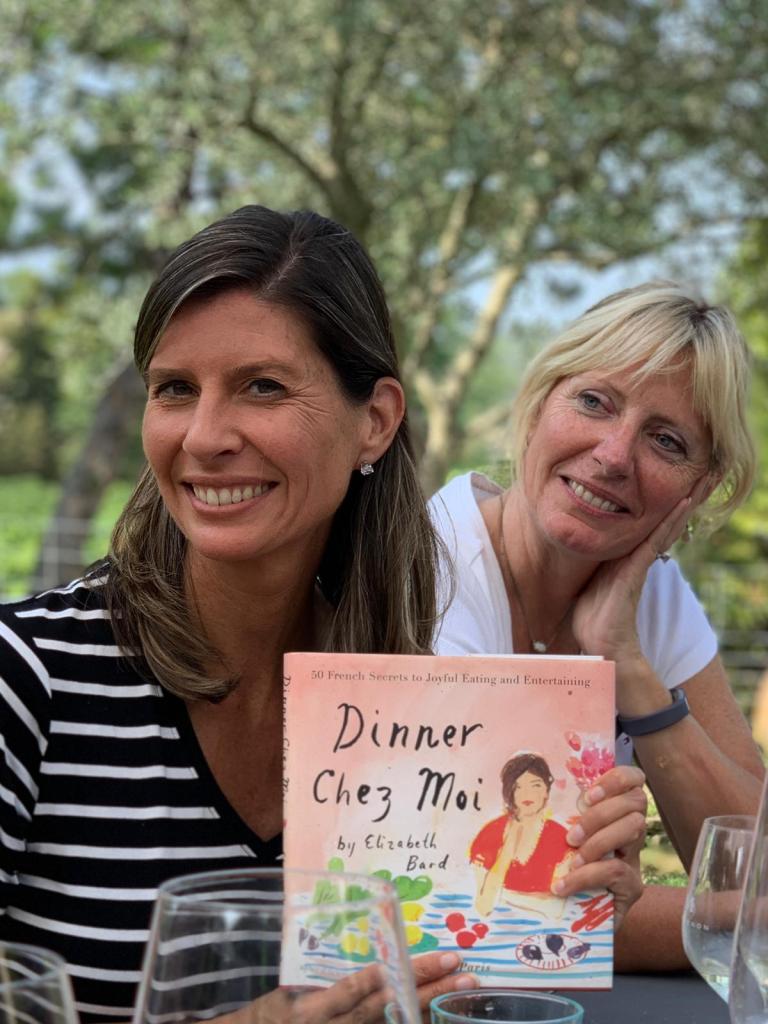
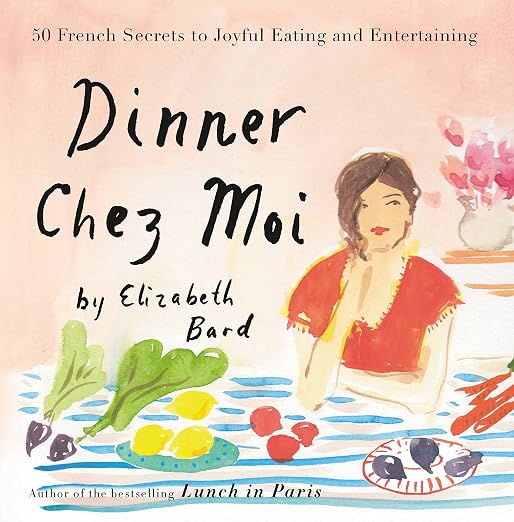
She produced a copy of Dinner Chez Moi and photographed my sister and me holding it, grinning like teenagers who’d been invited backstage.
Seven years later, planning another literary journey through Provence, I remembered our host. I could have contacted Elizabeth directly, but I worried about sounding like a literary stalker.
Dear Elizabeth, I’ve read all your books, know an alarming amount about your marriage, and have been following your movements through France for sixteen years. Would you like to have coffee?
Yes. An introduction from a mutual friend was best.
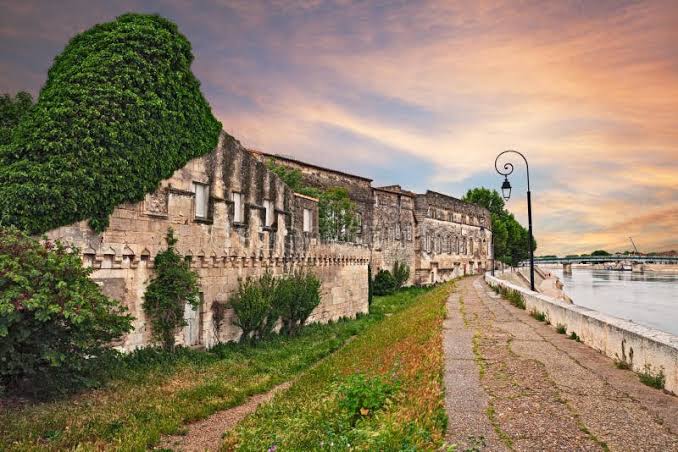
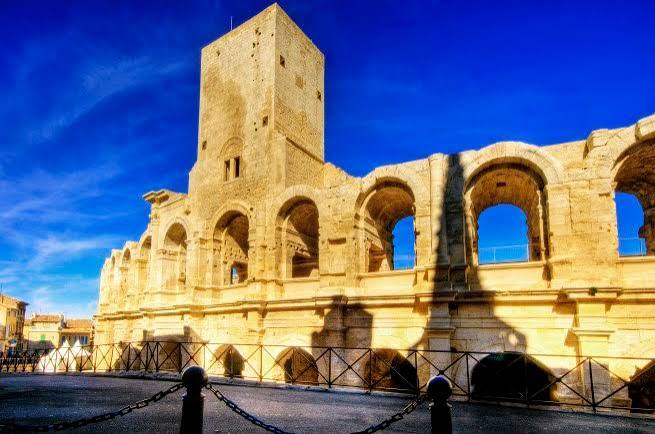
Now here I was in Arles, having walked from my apartment overlooking a nearly two-thousand-year-old Roman arena to a café in one of the city’s trendier neighborhoods, to meet a writer who was, rather refreshingly, alive. No gravestone, commemorative plaque, or museum docent required.
Elizabeth arrived in a smart jean jacket over a sundress, her hair pulled back, and ordered a latte in fluent French. I stood, uncertain whether to shake hands, hug, or attempt the ever-perilous French double kiss. I opted for the kisses, navigated them awkwardly, then told her how lovely it was to meet her. Twice.
Don’t dork out now. You’ve interviewed people before. You have a graduate degree. You teach Shakespeare, for God’s sake. Surely you can handle another Bard.
I launched into my questions, trying to capture her answers in my notebook. Within minutes, I realized the absurdity of maintaining eye contact, asking intelligent follow-up questions, and transcribing an articulate woman speaking at conversational speed. I asked if she minded my recording us.
She agreed. I put down my pen.
Once I stopped trying to capture every word, I began listening differently. I’d met writers whose company bore little resemblance to the pleasure of reading them. But Elizabeth was funny, candid, occasionally irreverent. The same woman I’d come to know through her books. Only now, instead of turning pages, I could ask questions, and she could even ask some back.
We talked about writing, marriage, her experience of motherhood, and the bewildering business of growing older. Elizabeth described the difficult years covered in her forthcoming memoir as “the midlife pileup,” or “growing up the second time.” Growing up a second time seemed to involve an unfortunate complication: the adults we once turned to for answers were no longer there. For both of us, those adults had always been our mothers.
Elizabeth described her relationship with hers as fusionnel, a French word for two people so emotionally intertwined that it’s difficult to tell where one ends and the other begins. I knew exactly what she meant. We’d both been raised by single mothers who were the centers of our universes: our protectors, confidantes, cheerleaders, and occasionally the people most capable of driving us absolutely insane. We’d remained extraordinarily close to them, and we’d both lost them in middle age, when we were supposedly old enough to manage without them.
Apparently, neither of us had received the memo.
Elizabeth’s mother died in 2017. Mine followed three years later. I told her that since losing my mother, I’d often wondered where she’d gone. If energy could neither be created nor destroyed, where was she now?
“She’s everywhere,” Elizabeth said.
“Oh, my gosh!” I exclaimed. “That was the end of my story!”
I explained that I’d written an essay about my mother’s final days in hospice, when the European journey we’d planned together became a journey of another kind. After her death, I’d felt her presence everywhere.
“You have to send that to me,” Elizabeth said. “Will you send it to me?”
Wait. What? Elizabeth Bard wanted to read MY writing?
My inner thirteen-year-old was shrieking into her pillow. Outwardly, I managed something resembling a professional response. “I would love to.” For a moment, I imagined our mothers having coffee with us, rather pleased with themselves for having arranged the meeting.
That sense of the past inhabiting the present extended to the way Elizabeth experienced Provence. She described the region as an “eternal present.”
“You drink it, you eat it,” she said. “It’s in the fold of every napkin.”
I thought of the Roman stones I’d passed that morning. Here, the past wasn’t something preserved behind glass. It was something people lived among, leaned against, walked over on their way to coffee. Our mothers, too, seemed to belong to an eternal present, no longer visible but woven into the texture of our days.
The more we talked, the more we discovered we had in common. We’d both been English majors, both drawn to the past, and both capable of becoming embarrassingly excited about a beautiful sentence. I felt as though we could have been junior high school girlfriends braiding each other’s hair. Same intimacy. Considerably more expensive skincare.
Two hours passed. Somewhere along the way, I’d ordered a second coffee, this time a proper latte like Elizabeth’s. Apparently, my body had not received sufficient stimulation from the first. Before we parted, Elizabeth offered to send me the manuscript of her forthcoming memoir so I could better understand the story she was writing.
Her unpublished manuscript!
I’d spent sixteen years getting to know Elizabeth through the pages of her books. Now she was inviting me behind the scenes.
When the bill arrived, I reached for it, but Elizabeth insisted on paying. I protested. She’d already given me two hours of her morning, not to mention access to her unpublished work.
No, she explained. I was her guest in Arles.
“Then coffee’s on me when you come to San Francisco,” I told her.
I floated out of Mazette into the Provençal sunshine, exhilarated by our conversation and possibly experiencing the early symptoms of caffeine poisoning.
Only later did I realize I’d forgotten to take a photograph.
Seriously, Pesano? You photographed the coffee, the notebook, the café, and approximately six thousand Roman stones, but not the woman you’d traveled to meet?
In 2019, I’d posed proudly with Elizabeth’s book, though Elizabeth herself was nowhere in sight. Seven years later, I’d spent two hours sitting across from her and had no photographic evidence whatsoever. Somewhere between putting down my pen and forgetting to take a photograph, I’d stopped trying to capture the moment and allowed myself to experience it.
Back in San Francisco, I devoured Elizabeth’s manuscript over two days. At one point I exclaimed “Oh my God!” to an empty room. I even lost track of time and was late for a phone call because I couldn’t put it down.
So much of her story felt familiar: the grief of losing a mother, the dismantling of expectations, the uncomfortable realization that middle age doesn’t necessarily come with instructions. But now, when I read her words, I could hear the woman who’d sat across from me at Mazette.
The same day I finished her manuscript, a writer friend sent me a message about an essay I’d recently published on Albert Camus.
“Julie, I absolutely loved your piece about Camus,” she wrote. “Perhaps because in some ways, my path has been similar to yours … every word of it struck a chord with me.”
I read her message again. For sixteen years, I’d recognized pieces of myself in Elizabeth’s writing. Now someone was recognizing herself in mine. I thought of the nervous woman arranging her notebook, pen, and reading glasses at that cherry-red table.
“If I can stand the suspense, life never gives me exactly what I want—it gives me something better.” ― Elizabeth Bard, Picnic in Provence: A Memoir with Recipes
“I live three thousand miles away from my mother. But no matter how far away, I’m still hers. I’m brave in the ways she’s made me brave and scared in the ways she’s made me scared. I’ll never belong to anyone the way I belong to her.” ― Elizabeth Bard, Picnic in Provence: A Memoir with Recipes
“In Paris the past is always with you: you look at it, walk over it, sit on it.”
— Elizabeth Bard,Lunch in Paris: A Love Story, with Recipes
“We both felt something of our future in these walls.”
― Elizabeth Bard, Picnic in Provence: A Memoir with Recipes
Julie, I can’t tell you how much I love your writings and so does Amy. Think I’ve asked if that is OK, if I haven’t is it OK. Also I would love to read your writing n your Mom, my sister in Hospice, if that isn’t to much to ask. How is the new housing going? Love you very much💜PS How was the turkey trot? did Milan do it with you? Jane Cooper


Julie, I can’t tell you how much I love your writings and so does Amy. Think I’ve asked if that is OK, if I haven’t is it OK. Also I would love to read your writing n your Mom, my sister in Hospice, if that isn’t to much to ask. How is the new housing going? Love you very much💜PS How was the turkey trot? did Milan do it with you? Jane Cooper
LikeLike