On September 15, 2026, almost exactly a century after F. Scott and Zelda Fitzgerald spent a season on the French Riviera, I ordered a Great Gatsby at the bar of their former home.
It seemed the appropriate thing to do.
The cocktail arrived in a large glass beaded with condensation, pale gold and effervescent, crowded with mint and garnished with a dried orange wheel. According to the menu, it contained St-Germain, Champagne, lime, orange and grapefruit. It cost twenty-eight euros and came with a little dish of nuts. Through the French doors, the Mediterranean glittered in the late-afternoon sun.

I loved it.
My friend Kimberley ordered one too and took a sip.
“Oh, that’s good.”
Then another and another. Halfway through the drink, she reconsidered.
“Actually, it’s too sweet.”
I kept drinking.
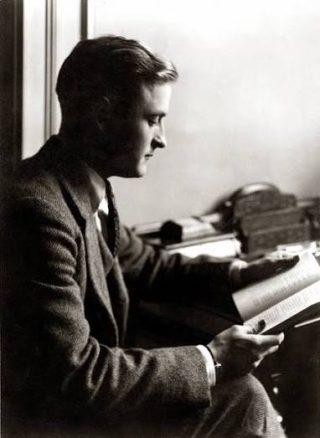
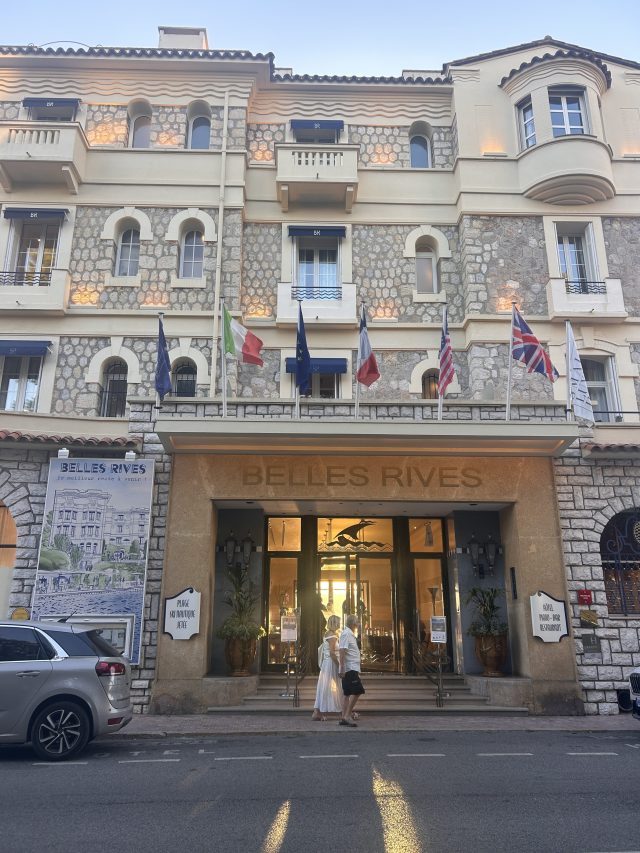
I had come to Hôtel Belles Rives in Juan-les-Pins with two people I loved. Kimberley had generously driven us there during my birthday week, and beside me sat Milan, the man I had fallen in love with nine months earlier. I was traveling through France in pursuit of writers, visiting the places where they had lived and worked, trying to understand what, if anything, remained of them there. I was particularly drawn to Fitzgerald’s lyrical prose, his fabled love story with Zelda, and his legendary summers on the Côte d’Azur.
He was everywhere.

Photographs hung on the walls. Books associated with the Prix Fitzgerald filled a glass cabinet. The bar bore his name. Even the cocktail menu had transformed his characters into drinks: Daisy Royal. The Great Gatsby. Zelda’s Reverie.
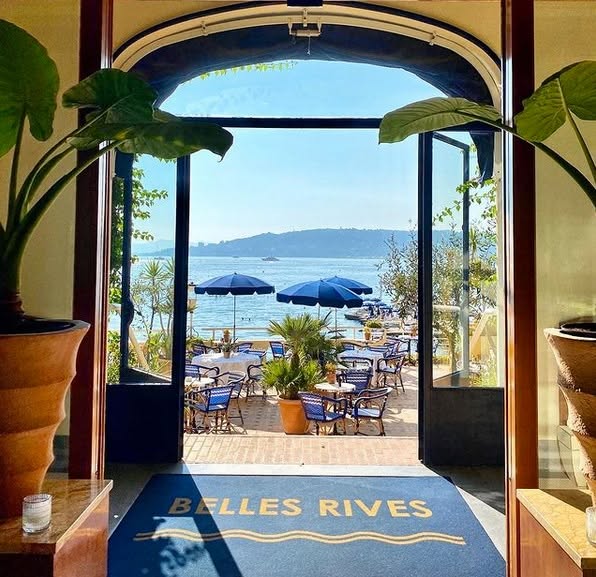
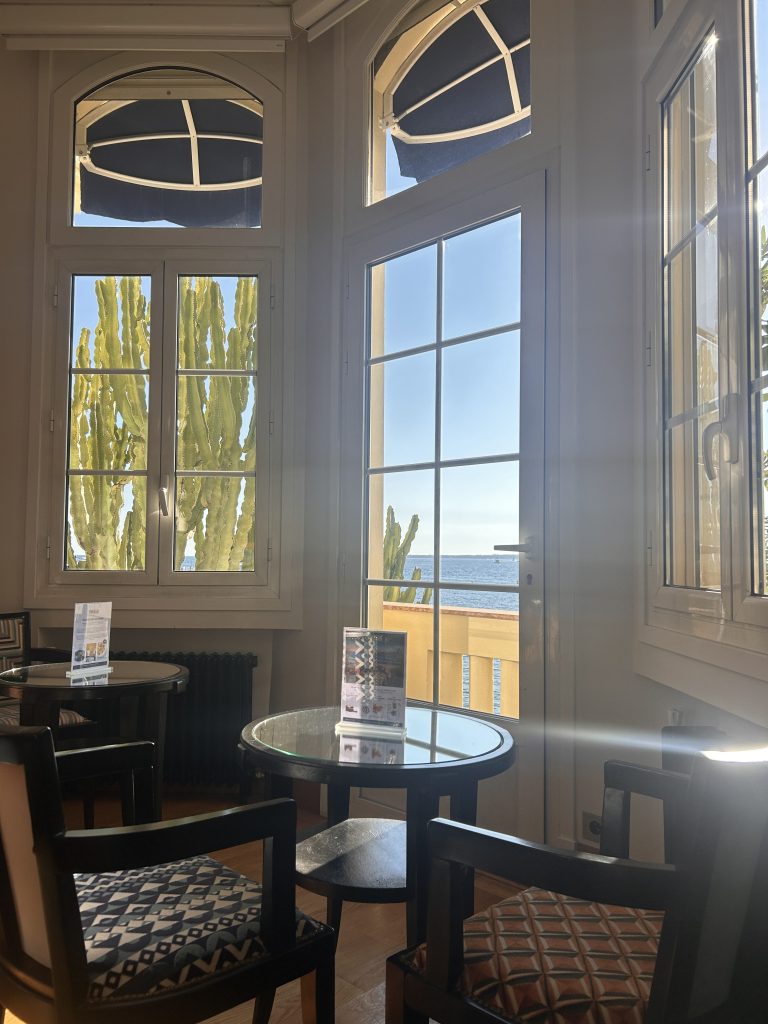
The hotel itself seemed designed to fulfill a Fitzgerald fantasy. Art Deco chandeliers scattered gilded light across zigzag-patterned chairs and polished wooden tables. Palms framed French doors opening toward turquoise water, and a private pier reached into the Mediterranean. The building had once been Villa St. Louis, the house Scott and Zelda Fitzgerald rented with their daughter, Scottie, during the summer of 1926. It was later enlarged and transformed into Hôtel Belles Rives.
But perhaps I had also come because I wanted to understand something about what Fitzgerald loved.
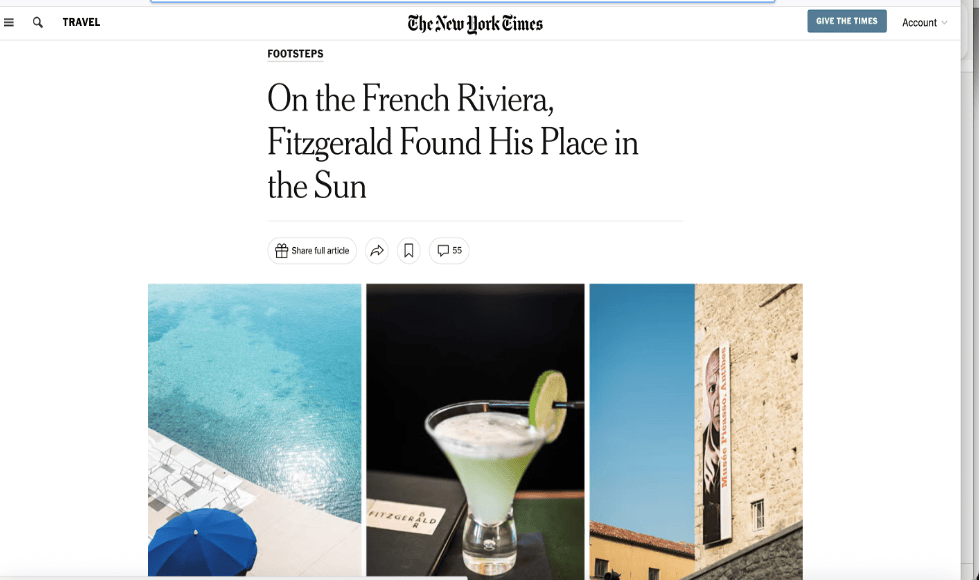
He was fascinated throughout his life by wealth. Not merely by money itself, but by what money seemed to confer: beauty, ease, status, belonging. In the New York Times article “On the French Riviera, Fitzgerald Found His Place in the Sun,” Nina Burleigh describes his enduring fascination with both the “glorious power” and the “ruinous effects” of great wealth. He could see through the seductions of privilege while remaining susceptible to them.
I understood that allure, though my own attraction to beautiful things had less to do with status than with the pleasure of beauty itself.
My modest upbringing knew free school lunches and hand-me-down clothes, winters in a drafty old New Hampshire farmhouse. Perhaps that is why beauty has always held a particular charge for me. I loved the harmony of a well-proportioned room, sunlight falling across an old wooden floor, flowers arranged in a simple vase. An elegant hotel or a beautifully set table could delight me, but so could a quiet garden or a little cottage with a view. What drew me wasn’t necessarily extravagance. It was the feeling that, for a moment, ordinary life had become something exquisitely refined, like the soaring music of Mozart.
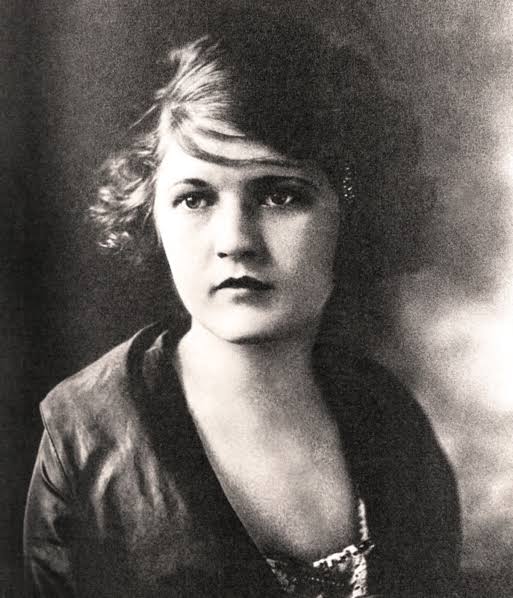
Zelda, however, had a different way of expressing her appreciation for beautiful things. In her correspondence to Scott, she once suggested that while money didn’t necessarily bring happiness, possessions could offer a woman comfort: the right perfume, a smart pair of shoes. She called them comforts to the feminine soul.
I bristled when I read those words. Was that all she thought women wanted? Perfume and shoes?
Of course, here I was, sitting in a grand hotel on the French Riviera, thoroughly delighted by a twenty-eight-euro cocktail. Were Zelda and I really so different? We both knew the pleasure of being lifted, however briefly, by something beautiful.
By the time Fitzgerald arrived on the Riviera in the 1920s, he had already become famous for writing about people reaching toward worlds they were not quite born into. He had finished The Great Gatsby in a nearby town the previous year, a novel about a man who believes wealth can win him both love and acceptance. At Antibes, Fitzgerald moved among the expatriate circle of Gerald and Sara Murphy, wealthy Americans whose elegant life at Villa America would help inspire Dick and Nicole Diver in Tender Is the Night.
“On the pleasant shore of the French Riviera,” the novel begins, introducing a “large, proud, rose-colored hotel.” Palms cool its “flushed façade,” while a dazzling beach stretches toward the Mediterranean.
I had swooned over those luxurious sentences long before arriving at Belles Rives. I’d imagined sitting in the Fitzgerald Bar with my tattered copy of Tender Is the Night, reading those lines aloud over a champagne cocktail.
Rosemary Hoyt swooned, too. The young American actress arrives on that dazzling shore and encounters Dick and Nicole Diver. They are beautiful, sophisticated, wealthy, magnetic. Dick possesses an almost magical ability to make people feel interesting and included. Nicole is elegant and mysterious. Their parties are effortless. Their friends orbit them.
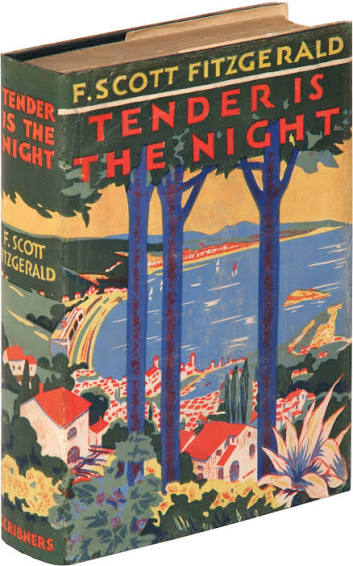
Rosemary falls in love with Dick. But in some sense, she falls in love with the Divers’ life. Only gradually does Fitzgerald reveal the fractures beneath its beauty.
Dick, a psychiatrist, had once been Nicole’s doctor. Her immense wealth surrounds their troubled marriage, while his increasing dependence on alcohol and loss of professional purpose gradually erode the charm that once made him irresistible. As Nicole grows stronger, Dick diminishes. By the end of the novel, he has nearly disappeared from the glittering world he once commanded.
Curious about the man who had imagined such a complicated story, I looked around the Fitzgerald Bar for glimpses of his life. Along the wall hung a photograph of Scott, Zelda and Scottie, suspended in time: young, glamorous, literary, immortal.
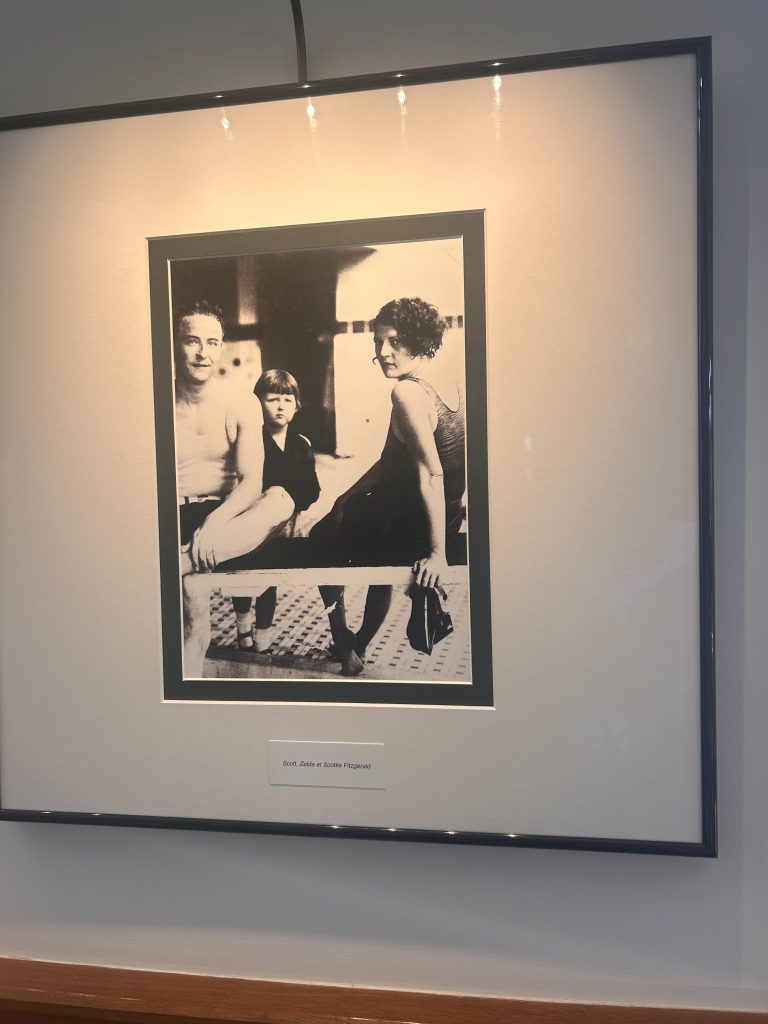
During his time at Villa St. Louis, Fitzgerald wrote of being “happier than I’ve been for years” and described one of those rare moments when everything “seems to be going well.” I studied the photograph again. Zelda’s shoulders slouched, and Scott’s smile seemed strained. Was there something melancholy in their expressions, or was I looking for trouble because I knew what lay ahead? Family recollections describe bitter arguments between Scott and Zelda in the villa and Zelda sometimes keeping luggage packed and threatening to leave.
It was easy, a century later, to judge the Fitzgeralds. All that extravagance, all that unhappiness. I caught myself doing it. Why hadn’t they recognized what was happening? Why hadn’t they made different choices?
Yet I too had stayed in relationships long after I knew something was wrong. I’d confused the trappings of happiness with its substance. Perhaps I owed the Fitzgeralds, and the younger woman I’d once been, a little more compassion. I looked again at the photograph. How much easier it was to recognize someone else’s mistakes when I already knew the ending.
Back in the Fitzgerald Bar, a pianist in a powder-blue tuxedo began playing “Moon River.” Its wistful melody drifted through the room, mingling with the clink of glasses and the low murmur of conversation.
I glanced at Milan, his face golden from days in the Provencal sun. He caught my eye and smiled. He had entered willingly into my literary pilgrimage, just as Kimberley had driven us there because she understood how much visiting Fitzgerald’s former home mattered to me.
I thought of the song’s two wanderers, setting off together toward an unknown horizon. Milan and I had spent weeks exploring France, enjoying candlelit dinners and spectacular views. But what I treasured most was having him beside me, sharing in a world I had loved long before we met.
Outside, the sun had begun its descent over the Mediterranean. We walked down toward the water. The bay had turned gold. Sailboats became silhouettes against the light, and the surface of the sea flashed so brilliantly that it was difficult to look directly at it. From the terrace, wine glasses caught the setting sun.

Everything was extravagantly beautiful.
There is something almost unbearably poignant about Fitzgerald writing from Villa St. Louis that he was happy while acknowledging the moment’s fragility. He called it one of those “strange, precious and all too transitory moments” when things seemed to be going well.
The Fitzgeralds would leave Villa St. Louis. Their marriage would become increasingly troubled. Zelda would require psychiatric treatment. Scott’s alcoholism would worsen. Tender Is the Night, conceived amid the beauty of the Riviera, would take years to complete. Fitzgerald’s later life would bear little resemblance to the dazzling expatriate existence that still clings to his name.
Yet I found myself returning to his happiness that afternoon, rather than the sorrows that followed. Whatever else was true of his life, the beauty he’d experienced here had been real.
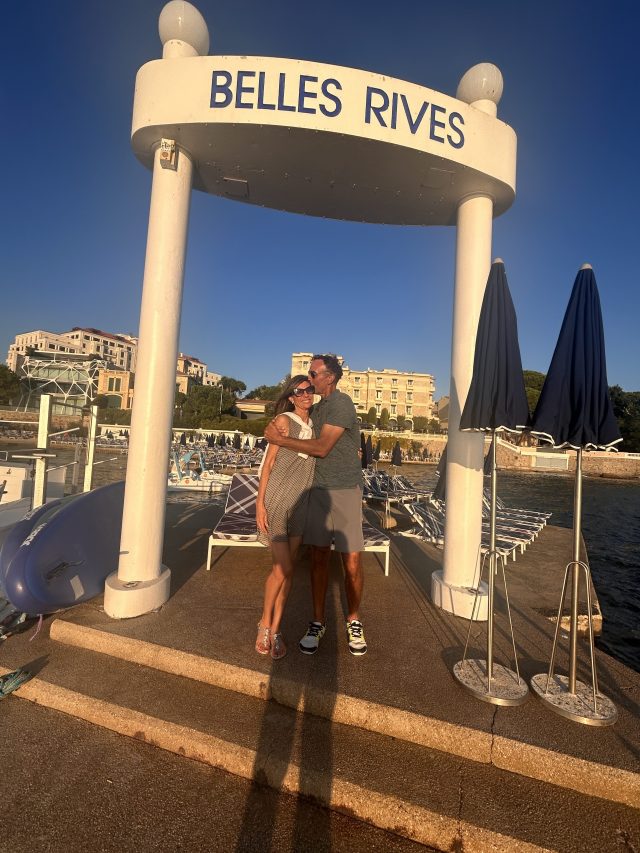
Before we left Belles Rives, Kimberley took a photograph of Milan and me beneath the hotel’s white sign at the end of the pier. I faced the camera. Milan put his arm around me and turned his face toward mine, kissing the side of my head.
Four days later, Milan and I wandered through Èze, the medieval village perched high above the Mediterranean. We found ourselves in a little jewelry shop.
We had already talked about marriage. Milan wanted me to choose a ring.
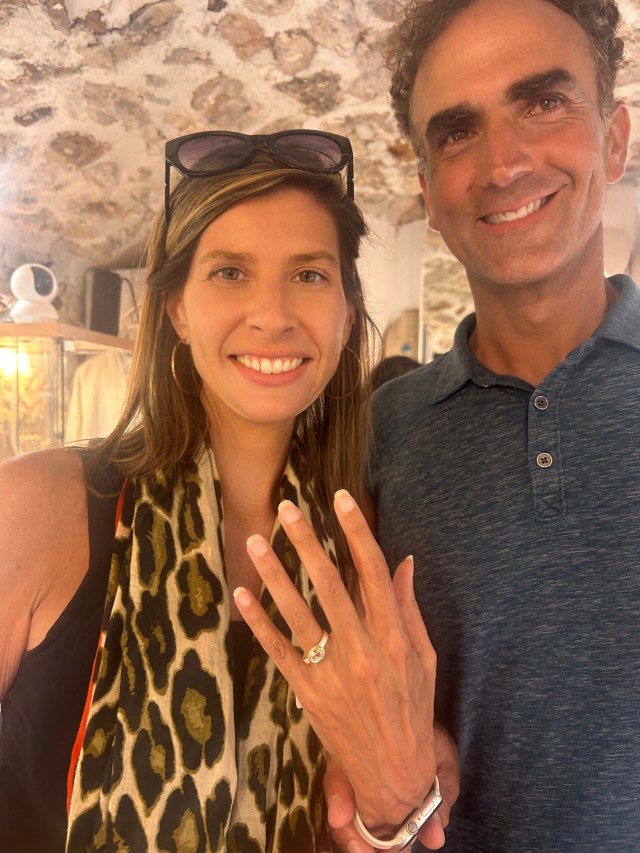
Not the ring I thought I was supposed to want, or one that would impress anyone else. He wanted me to find the one that felt like mine. I chose a ring with a pale pink jewel set in a slender gold-toned frame above a textured silver band. I loved its warmth, the way the solitaire caught the light. But I loved even more what would always surround it in my memory: the worn stone steps of Èze, the vast waters far below, and the man beside me asking what I wanted.
Later, looking at the photograph Kimberley had taken at Belles Rives, I noticed how splendid the hotel looked behind us, its pale façade glowing in the last light of afternoon. The Mediterranean shimmered beyond the pier. It was a scene Fitzgerald might have loved.
But we were front and center.
Milan’s arm was wrapped around me, his face turned toward mine. I could almost feel the warmth of his kiss against my temple.
The hotel was still magnificent. The sea still glittered. The champagne had sparkled.
I loved it all.
Further Readings
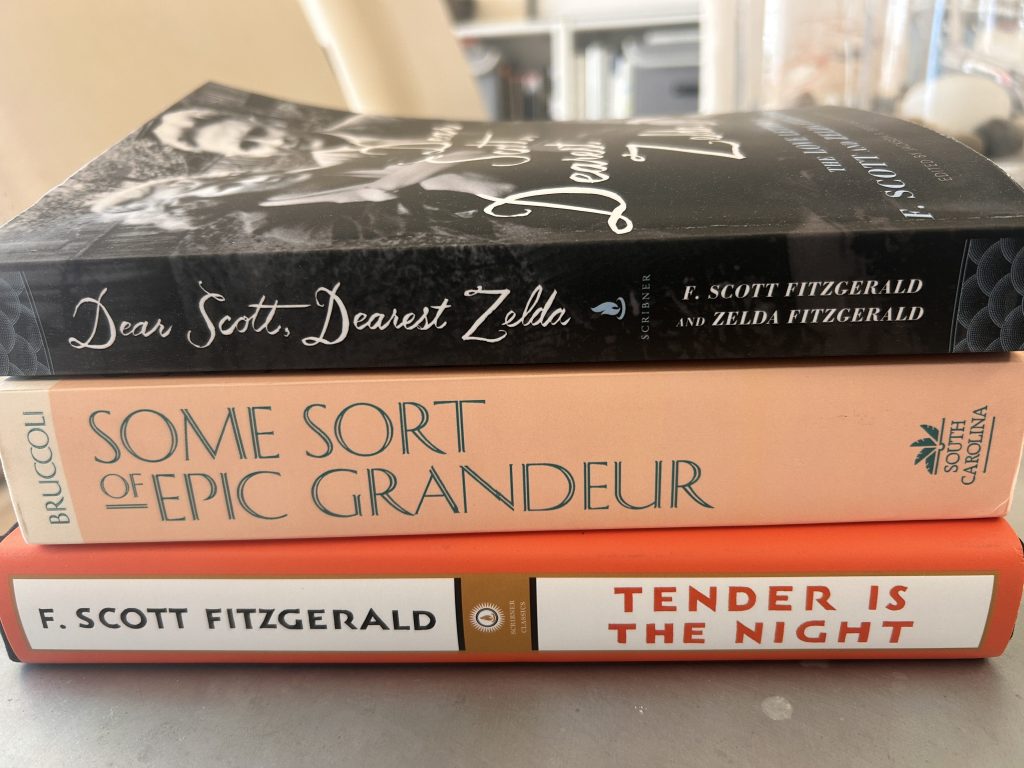
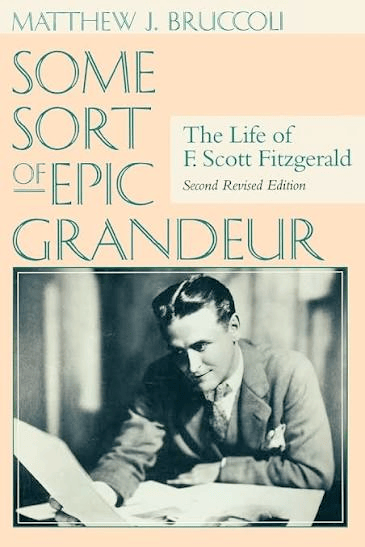
Bruccoli, Matthew J. Some Sort of Epic Grandeur: The Life of F. Scott Fitzgerald. 2nd rev. ed., University of South Carolina Press, 2002.
Fitzgerald, F. Scott, and Zelda Fitzgerald. Dear Scott, Dearest Zelda: The Love Letters of F. Scott and Zelda Fitzgerald. Edited by Jackson R. Bryer and Cathy W. Barks, Scribner, 2002.




Jules! It’s just a luscious piece!!!!! Is this on your blog? It should be published somewhere big! You’re such a good writer and it’s just beautiful.
Erin Byrne erinbyrnewriter.com
Grand Prize Solas Awards for Travel Story of the Year Lowell Thomas Award, Society of American Travel Writers Foundation
LikeLike
You are the best, E! Thanks!
LikeLike
Fabulous, Julie!! And CONGRATULATIONS!!XOLauren-
LikeLike
Lauren! Thanks for reading! Hope you are well.
LikeLike