
Spinster. Cat lady. Old maid.
The holy trinity of feminine failure, or so the culture once whispered. These words floated somewhere in my unconscious on the eve of my fifty-fifth birthday, like ghosts from another century still rattling their teacups. I was in the Lake District for the Romantics, not romance. For William Wordsworth, poet of golden daffodils and ruined abbeys, of intuition and imagination. What better way to celebrate my lucky double number than to bathe in “the spontaneous overflow of feeling” and the “remembrance of things past”?
Yet as the rain tapped against the car door, spinster came knocking too. An old archetype wanting to be seen, perhaps even redeemed.
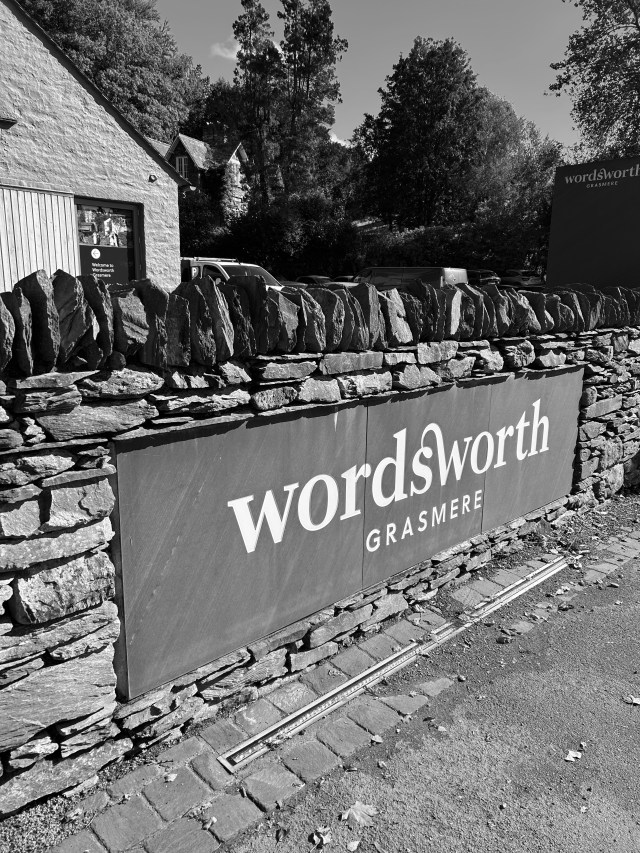
Through the winding lane toward Grasmere, the word stayed with me, quiet but insistent. Fog pressed low over the hills until a sign appeared on a rock wall — Wordsworth — the name that had first awakened me to the music of language. This was the home where William lived with his sister Dorothy, the home where I was determined to shake off this uninvited guest of loneliness.
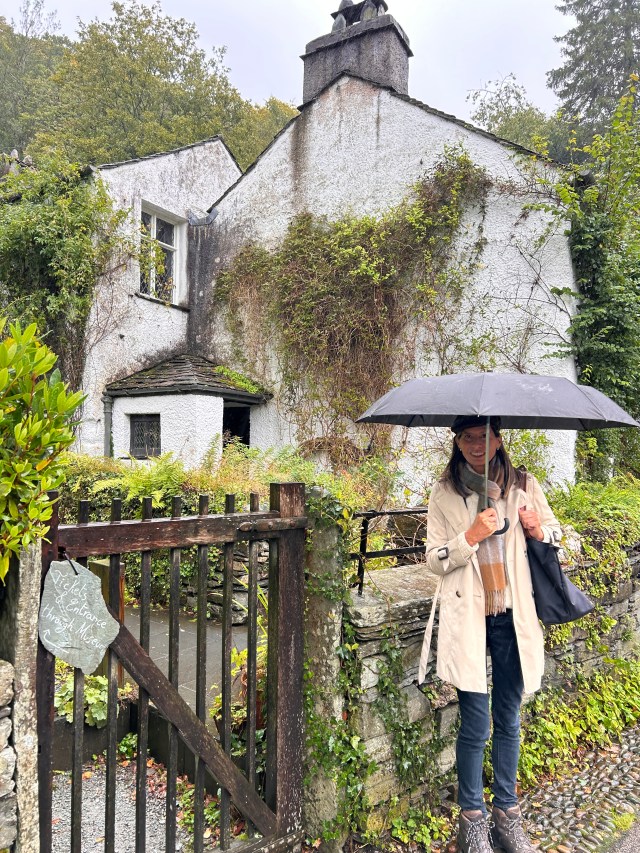
I wandered past the museum buildings, unsure which path led to the door, until a small gate appeared behind a cluster of stone walls. Dove Cottage crouched against the hill, its slate roof dark with weather, whitewashed walls softened by ivy—a house both humble and waiting.
Inside, the air was cool and close, carrying the hush of two people who had moved in rhythm for years. Crooked beams crossed the ceiling; the hearth seemed to warm only by memory. Near the window, a small table gathered the traces of their shared life: teacups, sewing thread, folded pages, pinecones. It seemed to serve every purpose at once—desk, supper table, altar.

I could almost hear the scratch of quills overlapping with the quiet clink of porcelain. Dorothy copying William’s drafts with a steady hand. William pausing to read a line aloud for her approval. Between them, the pace of ordinary things became sacred.
A plaque near the table hinted that much of Dorothy’s life gathered around his words. I imagined how their long separation after their mother’s death might have deepened that bond—her fierce attentiveness to him, to nature, to every shifting leaf. Another sign quoted his poem “The Sparrow’s Nest”: she “gave me eyes, she gave me ears.” I lingered on the phrase. Her journals had fed his verse like an underground spring. She was the current; he was the scribe.
In that small room, the air seemed to keep their secret. Perhaps what the world called genius began as devotion, two souls trying not to lose each other again. Dorothy herself wrote only five poems while living at Dove Cottage, choosing instead to dedicate her creative life to half of his.
I’d done versions of that myself: grading papers while reheating leftovers, helping others polish their sentences while mine waited patiently to be written. There is satisfaction in that kind of devotion, until you realize it’s slowly editing you out of your own story. Standing in that shadowy room, I felt both admiration and unease. She was powerful, yes, but only in the service of someone else’s name.

I climbed the narrow stairs, following the faint scent of old wood and wool. At the top, I found myself drawn to Dorothy’s bedroom, a space pared to its purpose. A small side table with a candle, a few pages of writing, and a piece of sewing. Against the slanted wall stood a narrow bed, startling in its singleness. I couldn’t take my eyes off it. The modest coverlet, the careful neatness, the space built for one.
A guide standing quietly near the doorway said that Dorothy had lived here through her thirties, unmarried and, it seems, uninterested in marrying. The word spinster hovered in the air before either of us said it. He added that she’d been “more independent that way,” but the phrase felt like an awkward stitch that still revealed the messy thread beneath.
On the wall hung a line she’d written describing Dove Cottage “the loveliest place on earth.” And perhaps it was. Safety wrapped in service, belonging disguised as purpose. Maybe it was easier to be half of someone brilliant than to risk being whole and uncertain.
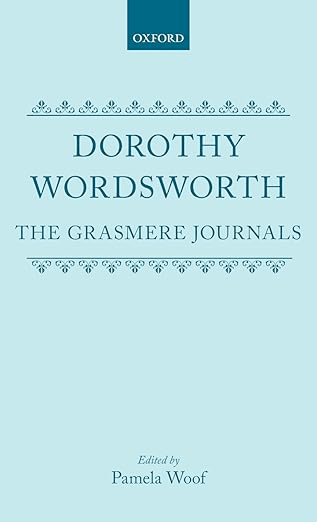
When William married Mary Hutchinson in 1802, Dorothy couldn’t bring herself to attend the ceremony. She wrote in her Grasmere Journal the night before:
“I kept it on my finger all night. When I saw the ring, I could not help thinking of the time when he gave it me… I flung myself on the bed, and wept.”
Standing in that room for one, I thought of my own life. When friends or family coupled off, their worlds folded neatly into twos while mine remained a singular orbit. I’ve lived alone for years. The quiet is mostly kind until it isn’t. The truth is, solitude can feel holy at noon and hollow by nine.
Somewhere inside that stillness, I felt her there. Not as ghost but as echo, the kind that lingers when attention has been absolute.
Did you feel that emptiness too, Dorothy? Did you learn to meet your loneliness without judgement—to stay inside the hollow long enough to hear what it was asking of you?
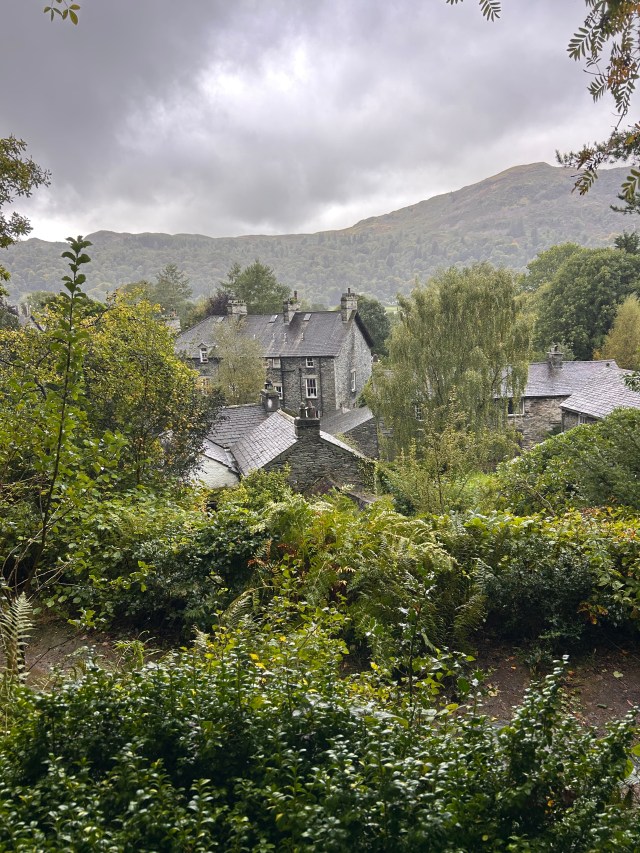
Dorothy seemed to follow me as I climbed the tiered garden behind the cottage, the fells rising like old companions beyond it. A few apple trees still stood, the ones her brother John had planted before he died at sea. I imagined her here after his death, after William’s marriage, searching the green hills for what might still answer her. Perhaps the solace she once found in tending this earth had turned, by then, into a practice of mourning.

Leaving Dove Cottage, I followed the narrow road two miles south toward Rydal Mount, the next step in her long apprenticeship with loss. The house appeared suddenly on a hill, grand, sunlit, and self-assured. After the dim warmth of Grasmere, this felt almost theatrical. Wide lawns combed to perfection, a view that performed its beauty toward Windermere Lake.
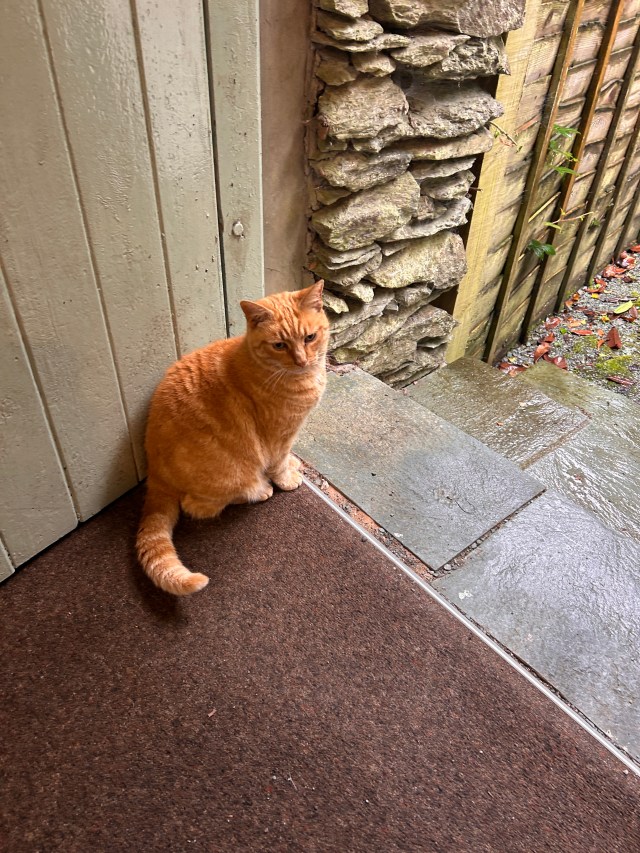
I stepped through the gabled doors and into a well-appointed entrance. Wallpaper bloomed with pattern; portraits watched from their gilded frames. A ginger cat padded toward me, tail high, as if a butler conducting a tour. Persian rugs softened the floorboards, their woven reds and blues holding centuries of tread.
This was where the poet laureate raised five children and welcomed the era’s great minds: Coleridge, Southey, Emerson. Unlike Dove Cottage, where life pressed close around a single hearth, Rydal Mount spread itself out. Dining room in one wing, study high above on the third floor, nursery down another hall.

I imagined Dorothy in this world of separation and ceremony, her energy thinning as the house filled. Perhaps she sat in the corner by the window, tracing the flight of a butterfly beyond the glass. Behind her, the sound of conversation, laughter, and music must have drifted through the halls, too many sounds scraping against her sensitivity.
Watching her there, I felt a quiet recognition. The first half of my own life had once brimmed with motion — classrooms, airports, deadlines, students’ voices rising all at once. I used to mistake the noise for vitality. Lately, I crave what she must have craved: a gentler rhythm, the chance to listen for what remains when the world stops asking.
I followed the carpet-lined staircase to the upper floor, where sunlight poured through tall windows. Dorothy’s room was uncomfortably grand — wide-planked floors, an ornate rug, a single bed set adrift in the middle. It seemed swallowed by the overwhelming space around it.
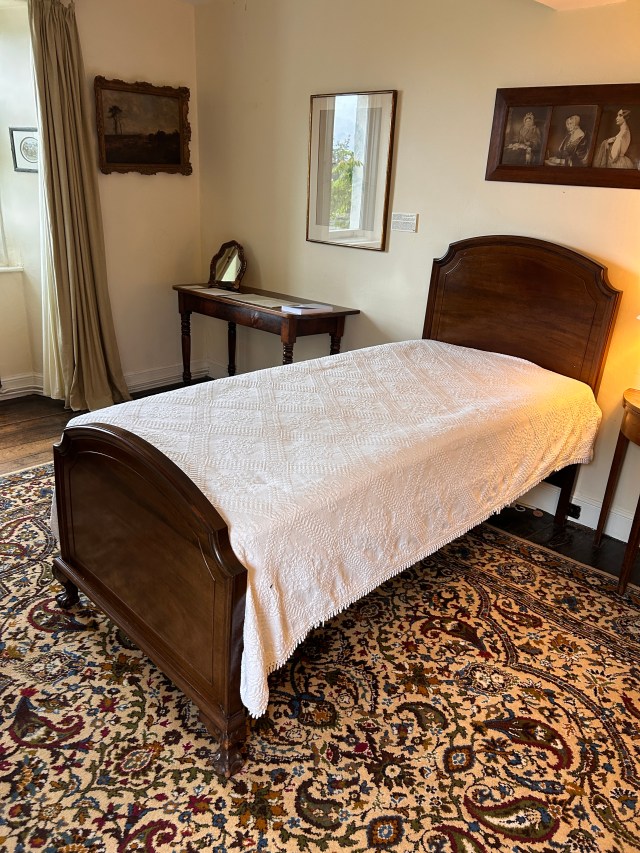
It was here, in her fifties, that melancholy, illness, and dementia settled in. The same woman who had once roamed the mountains with boundless steps was now confined to a few paces between bed and window. I paused at that line: her fifties. My own age. A mirror I hadn’t expected.
Yet here, when her world narrowed, her voice widened. In these years after so much loss (the loss of Dove Cottage, the loss of the close connection to William, the loss of her body), she wrote more than ever before.
An outpouring of poems wholly her own, born from solitude.
On the side table lay a copy of one, “Thoughts on My Sick-Bed.” I read each line slowly until I reached a stanza that held me still:
I felt a Power unfelt before,
Controlling weakness, languor, pain;
It bore me to the Terrace walk—
I trod the hills again.
That word, Power, rose from the page. It wasn’t force but union. The moment when creation flows from the marriage of all we are, not the halves we’ve been taught to offer.

My own seasons of quiet came back to me: after my mother’s death, after the loss of my home, after love’s undoing. When the world seemed to shrink to the size of a desk, a notebook, a single breath, something stirred. Language began to surge again, not from effort, but from coherence, from the alignment of what had long been divided.
I turned to a quilt draped over a wicker chair, its faded threads catching the light. I thought of Dorothy, her gaze turned inward yet luminous, spinning the raw fibers of solitude into something radiant. The word spinster drifted back, not as judgment, but as invitation. Perhaps it was never about being alone but about learning to weave wholeness from within.

Wanting to pay one last tribute to Dorothy, I made my way to the churchyard of St. Oswald’s in Grasmere, her final resting place. The path wound past Wordsworth’s Daffodil Garden, the air smelling of cinnamon from the gingerbread shop nearby. Beneath the yew trees, moss softened the older gravestones, their names half-erased by weather and time. The Wordsworths lay together in a shaded cluster, their inscriptions faint, hard to tell one from another.
I think I found her.
Her name carved beside William’s, Mary’s, and John’s, all interlaced together into one tapestry of earth and sky and words.
I paused there, attuning to the silence that gathers when a day comes to a close. Perhaps this was her final teaching: that we return not apart, but as part of everything.

The next morning on my birthday, I opened my journal. A cloth bookmark rested there, a gift from my time with Dorothy. Its golden stitches recalled the hills and the daffodils. In that stillness, I felt her presence. As if across two centuries, we were both listening for the same thing.
I began to write, slow and steady, the words threading forward like her own, a quiet act of spinning gold.
Quotables
“Dorothy Wordsworth (1771-1855) has come down to us, as the scholar Ernest de Selincourt put it, as probably ‘the most distinguished of English prose writers who never wrote a line for the general public.’ Her journals, not intended for publication, are small, filigreed masterpieces” (Garner, Dwight. “A Brother’s Keeper: The Other Wordsworth.” The New York Times, 24 Feb. 2009.)
“What’s filtered down to us is a certain fiery yet ethereal spirit. In his poem ‘Tintern Abbey,’ her brother praised ‘the shooting lights’ of her ‘wild eyes.’ Thomas de Quincey saw something of the ‘gipsy’ in her, and called her the ‘very wildest (in the sense of the most natural) person I have ever known’ ”(Garner, Dwight).
“Dorothy stored the mood in prose, and later William came and bathed in it and made it into poetry,” Virginia Woolf
Further Reading

Atkin, Polly. Recovering Dorothy: The Hidden Life of Dorothy Wordsworth. Saraband, 2021.


 Julie Pesano
brilliant— all too close.
LikeLiked by 1 person
A million thanks for reading!
LikeLike
Wow, in my humble opinion, your best piece yet! It feels so honest, clear, true. So in awe of you, Julie!
LikeLiked by 1 person
Thank you!!!
LikeLike