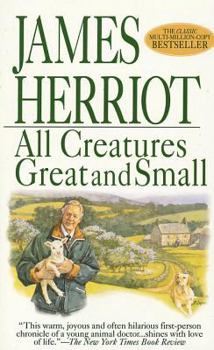

The grandfather clock in the entryway of James Herriot’s home kept time. Tick, tick, tick – as if nothing had changed. The sound filled the narrow hall, brushing against the faint smell of wool coats and polish. Light from a small window pooled on the patterned floor tiles, catching a thread of red from the door behind me. I stood still. Listening. As if I had stumbled into a moment preserved, one that belonged to another century and, somehow, to another version of myself.
Before the divorce.
Before my mother died.
Before life grew complicated and loud.

I had come to Thirsk, the Yorkshire village where Herriot’s stories were born, to remember the time before, the feeling of a world in fictional Darrowby that was kind, funny, knowable. A world that trusted in good neighbors, well-fed animals, and warm tea after rain.
Alfred Wight, better known by his pen name James Herriot, was a veterinarian who came of age during the Depression and practiced through the Second World War. He spent his days elbow-deep in mud, tending cows in blizzards and sheep in dark barns. Yet when he wrote, the world he made was light: farmers who grumbled but cared, dogs with personalities, humor stitched through hardship. All Creatures Great and Small, All Things Bright and Beautiful, All Things Wise and Wonderful, each book turned ordinary toil into something golden. Herriot seemed to have found a way to see the world before it grew dim.
Outside the James Herriot Museum, all I could see was grey. A thin English rain smudged the rooftops, blurring the edges of everything. I found myself longing for a bit of light, for the sun to find its way through.
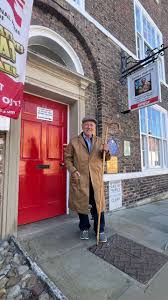
A small group gathered by the curb, rain pooling at our feet. Our guide, a man of the Dales in a tweed cap, rested his hand on a shepherd’s crook. He looked of someone who had weathered every kind of sky. In faces from far away, I recognized a shared wish for gentleness, for something steady to hold onto.
“Reet then, off we go,” his vowels rounded and rolling.
We first walked toward the church where Alf married Joan Danbury, his real-life Helen. The stone steeple rose pale against the clouds, the clock on its tower echoing the one inside Herriot’s hallway. The guide told us that Alf’s parents disapproved of the match and refused to attend the wedding. Yet in his fiction, especially the PBS series, the wedding is joyous, bells ringing, families reconciled. He somehow rewrote disappointment into harmony.

I ran my hand along the damp stone of the church wall, thinking how easy faith once seemed, to believe love could mend what pride had broken. When I was young and married, I believed that too, that everything lost could be restored by good will and time. Standing in that churchyard, I wondered when life had stopped feeling that simple.
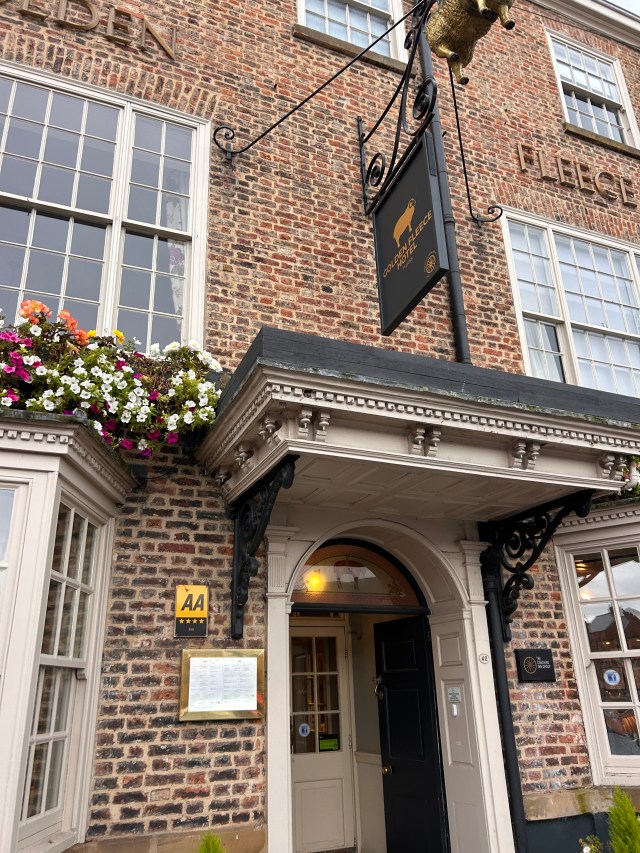
From there we walked to the Golden Fleece Inn, its window boxes spilling with geraniums and a gilded lamb swinging above the door. When someone opened it, the smell of ale and roast beef drifted out, warm and familiar. This was the model for Herriot’s Drovers Arms, the kind of pub where Siegfried and Tristan might have leaned on the counter, trading jokes and small spars over pints of bitter. In real life, Siegfried was Donald Sinclair, the sharp-tongued, exacting senior vet, and Tristan his younger brother Brian, all charm and mischief.
“You’re lazy, that’s your trouble, isn’t it? You’re bloody bone idle!” Siegfried once snapped after another failed exam.
Yet Herriot never left him there. “In fact, I think the Gods love people like Tristan who sway effortlessly before the winds of fate and spring back with a smile,” he wrote.
On the page, he rounded their roughness, turning contradiction into comedy and affection until I almost wished I could join them there, laughing as the door swung closed behind me.
As I looked through the pub window, I thought of the train ride north with my sister a few days earlier. She was reading one of Herriot’s funnier passages, the one where he was kicked by a cow mid-delivery and still managed to compliment the farmer’s fine barn.
“Oh my god,” she gasped, pressing the page to her chest. “I can’t… I have to put it down.”
Her shoulders shook, tears streaming. I started laughing too as she doubled over her book, and soon the whole carriage was smiling. The air felt lighter, like fog lifting, like the world I used to know.
Maybe Herriot’s humor wasn’t escape. It was faith. A belief that life, however messy, is still worth loving.
Our next stop was Thorpe House, the grand Georgian home of Marjorie Warner. This wealthy widow was the real-life inspiration for Mrs. Pumphrey, whose devotion to her Pekinese, Tricki-Woo, became one of Herriot’s most beloved tales. As the rain pattered harder on our umbrellas, the guide told us that after every successful treatment, Marjorie sent hampers of delicacies to Alf: wine, pâté, chocolates, all for his kindness to her dog, Bambi.

In the books, Mrs. Pumphrey’s excesses are comic (silver dishes for dog biscuits, personal chauffeurs for veterinary appointments), but never cruel. Herriot wrote her with fondness, not ridicule. Standing before her hedge-lined house, I thought of my mother, who saved all my dance costumes, sent mushy cards, and retold travel stories, which she called walking down memory lane. I used to tease her for her sentimentality. Now I miss it – the tender, wholehearted ways she made love visible.
By the time we returned to Skeldale House, the rain had thinned to mist. The red door shone against the fading brick, the brass plaque polished bright: James Alfred Wight, MRCVS. Our guide paused there, letting us take it in. I touched the cool metal, imagining Herriot coming home late, coat heavy and wet, the smell of animals and disinfectant clinging to him. Inside, the hallway glowed with lamplight, the clock still keeping its ordered time.
We moved from room to room: the sitting room with its floral armchairs, the gramophone in the corner, the framed photograph of Alf in his white lab coat, smiling as he held a kitten. The air smelled faintly of newspaper and chimney soot. I pictured Jess, the Golden Retriever, curled by the fire as Siegfried smoked a pipe. Perhaps the same kind of pipe my father used to smoke, the scent of it still tucked somewhere in memory.
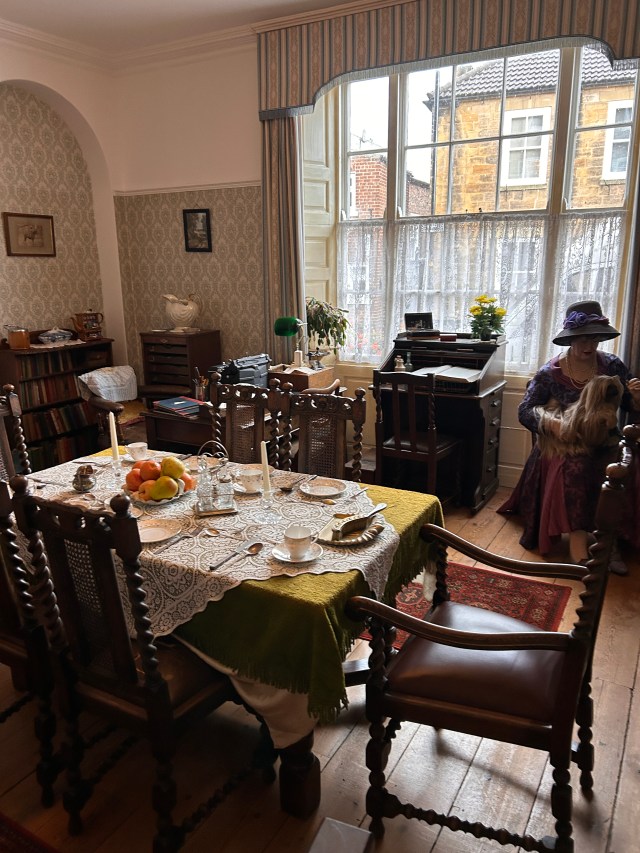
Across the hall, the dining room seemed to wait for company, its oval table set with plain white plates and a bowl of apples in the center. In my mind’s eye, it was Christmas evening in 1940: Siegfried, Tristan, James, Helen, and Mrs. Hall gathered close, paper crowns folded from old wrapping, laughter rising as they passed the potatoes or poured the port. Outside, the blackout curtains would be drawn, the air raid sirens silent for once. Beyond those walls, the world was at war, but here it was merely winter. Inside, the talk would circle around weather and lambing, the kind of ordinary chatter that steadied a world gone uncertain.
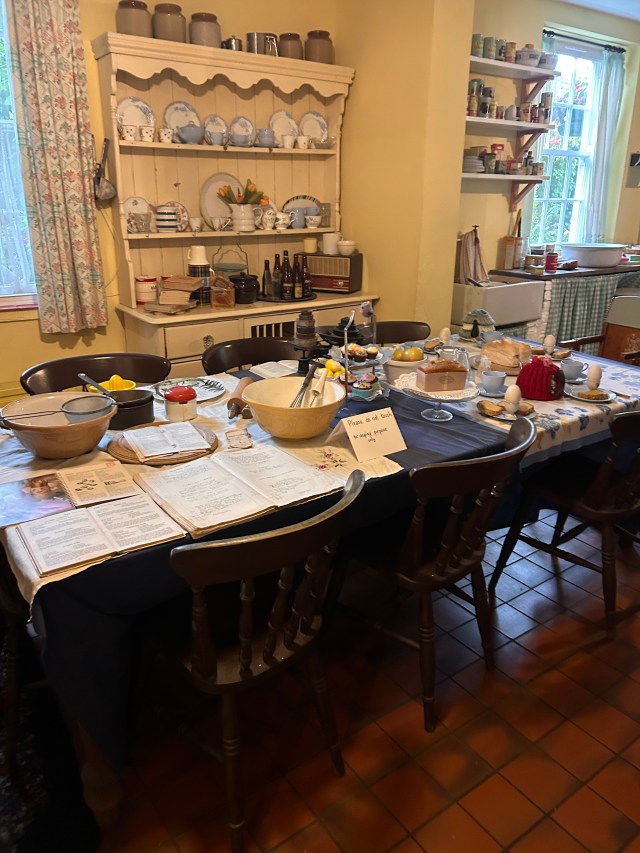
The imagined Christmas lingered as I walked down the hall into the kitchen, the scent of baking still clinging to my thoughts. Mixing bowls and recipe cards lined the long wooden breakfast table. I could almost hear the clatter of teacups, the whistle of a kettle, the sweetness of biscuits just pulled from the oven. We learned that Mrs. Hall, the beloved housekeeper from the books, was mostly invention. Before Alf married Joan, he had hired a few women from town to cook and clean, but none were an integral part of the family. Perhaps he had written Mrs. Hall into being because he needed her, needed that maternal steadiness to hold the chaos together, to make the house a home.
I paused in that kitchen, thinking about the space between fact and feeling. Herriot hadn’t disguised life; he had illuminated it. Maybe that’s what imagination is for – to rebuild innocence after it’s been lost.
I retraced my steps through the narrow hall, past the steady tick of the clock, and walked back out the open air. The sky was clearing. Mourning doves cooed from the eaves; Yorkshire limestone shone along the sidewalk.
I turned back to look one last time at the red door. It wasn’t nostalgia for a life I’d lived, but for a way of seeing the world. Steady. Trusting. Whole.

Want More of James Herriot? Me too.

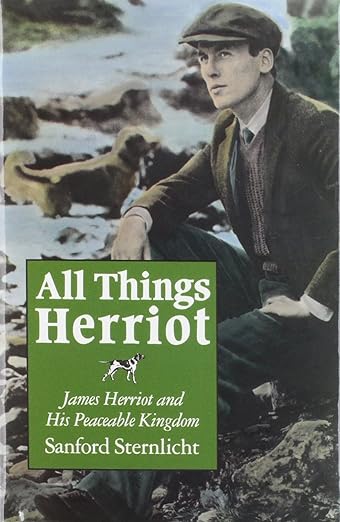
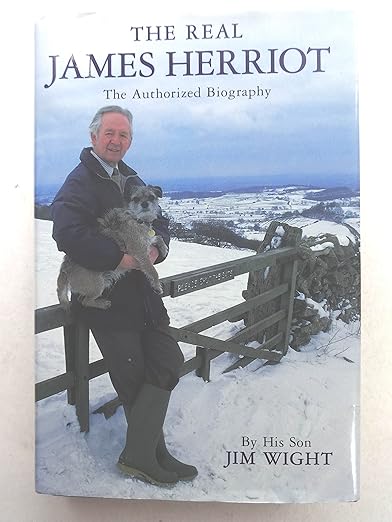
All Quotes Bright and Beautiful
“I could see the wide, rich landscape of the Dales spread out before me, and I felt that life was a good thing after all.”
— from All Creatures Great and Small“The sun was shining and the air was full of the scents of the countryside. The earth seemed to pulse with life.”
— All Things Bright and Beautiful (1974)“There’s no better feeling than watching a new life emerge into the world.”
— All Things Wise and Wonderful“There’s something about the Yorkshire air that gets into your blood and never leaves.”
— Every Living Thing (1992)
 Julie Pesano
Just saw this sitting
LikeLike
Julie, Having read all the books and loving them. This was a walk down memory lane. The best part of bringing this story alive, which it does so well, is the personal that you weave into the travel log. I’ve shared with my friend Amy, you may have met her, Amy lives across from Kelley and is a writer also. Amy loves your writing as much as I do and I shall forward this one to her. I tried to leave a comment, but was having a dilly of a time to reset password and now I have to wait 30 minutes before I can try and do again. Love you Julie. Keep the writing coming. It is such a breath of fresh air in these troubled times.🥰Jane Cooper
LikeLike
Oh Janey! I’m just seeing your thoughtful comment now! Gosh, wordpress can be wonky. Thank you so much for your kind words. They mean the world!!!!
LikeLike